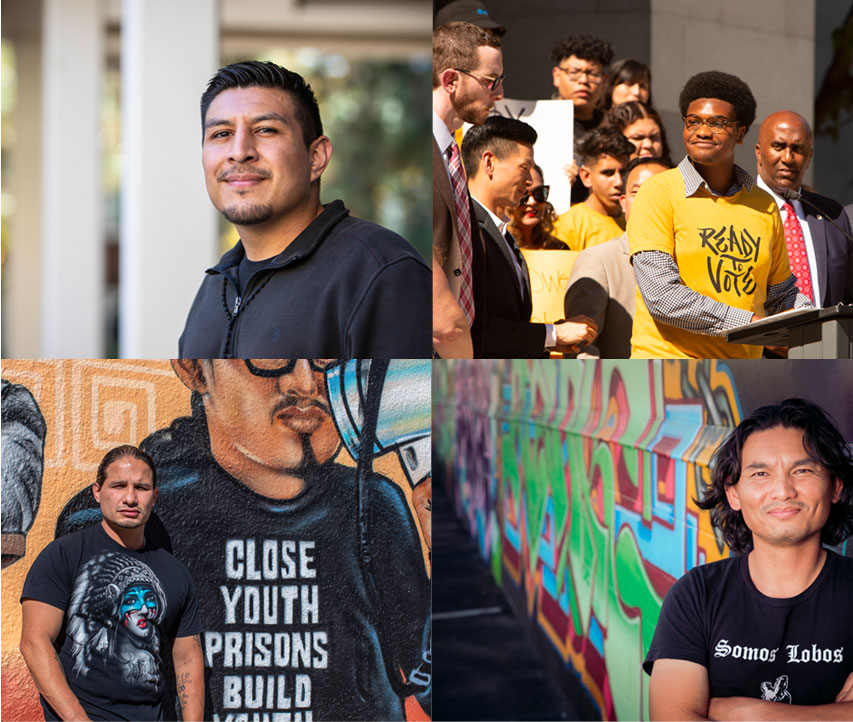

From Harm to Healing: Arthur Soriano on Youth Leadership and Opportunity
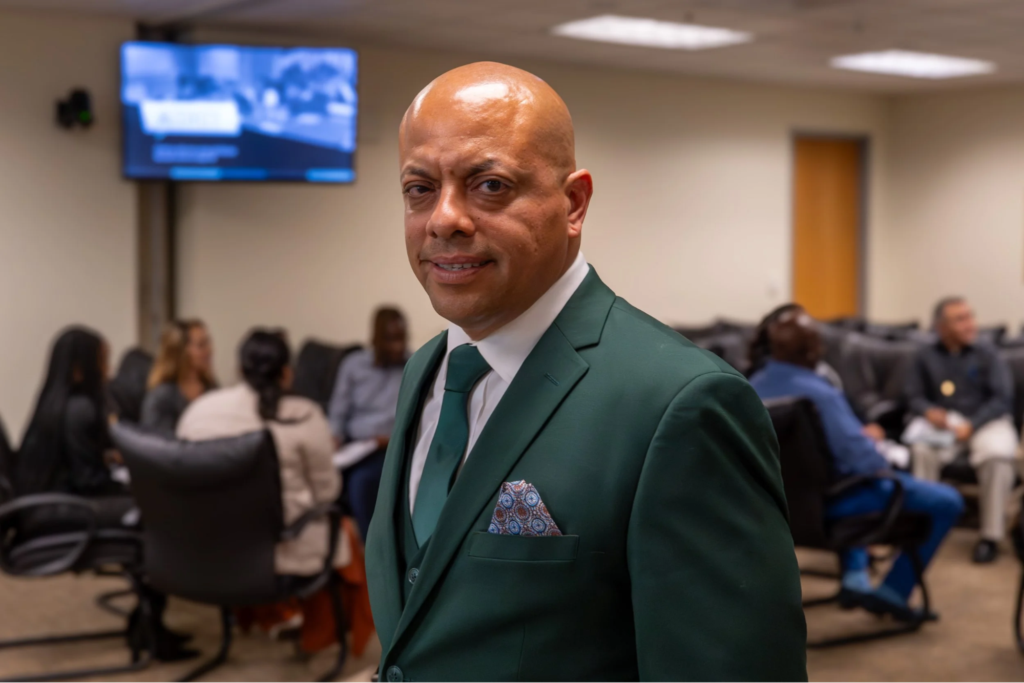
As the founder and CEO of Youth Empowerment in San Diego, Arthur Soriano spends his days mentoring young people impacted by the justice system, supporting families and helping create pathways to healing and opportunity. But long before he became a community leader, he was in the same position as many of the young people he now serves.
After spending more than two decades involved in the justice system, Arthur returned home determined to build something different for the next generation. Today, Youth Empowerment San Diego uses a credible messenger model rooted in lived experience, mentorship, restorative practices and community connection to support young people navigating challenges similar to those Arthur once faced.
His story shows that when boys and men of color have access to healing, trusted mentors and opportunities, they can create meaningful change in their communities. Through our membership network, CFBMoC continues to support leaders and organizations advancing this vision in communities across the state.
We spoke with Arthur about his journey, the challenges facing boys and men of color today and what it will take to build a thriving future for all young people.
Tell us about San Diego and the community you call home.
San Diego is unique because of its diversity, especially in neighborhoods like City Heights. You have people from all over the world—Vietnamese, Somali, Kurdish, Lao, Cambodian, Mexican, Ethiopian and Haitian communities —all living side by side. Many families came here as refugees after experiencing war, displacement and hardship.
It’s a true melting pot. You can walk through a neighborhood like Little Saigon and experience the culture, food and traditions that make this city special. At the same time, many of the communities we serve are navigating deep challenges rooted in poverty, trauma and systemic inequities.
What is Youth Empowerment, and what does your work look like day-to-day?
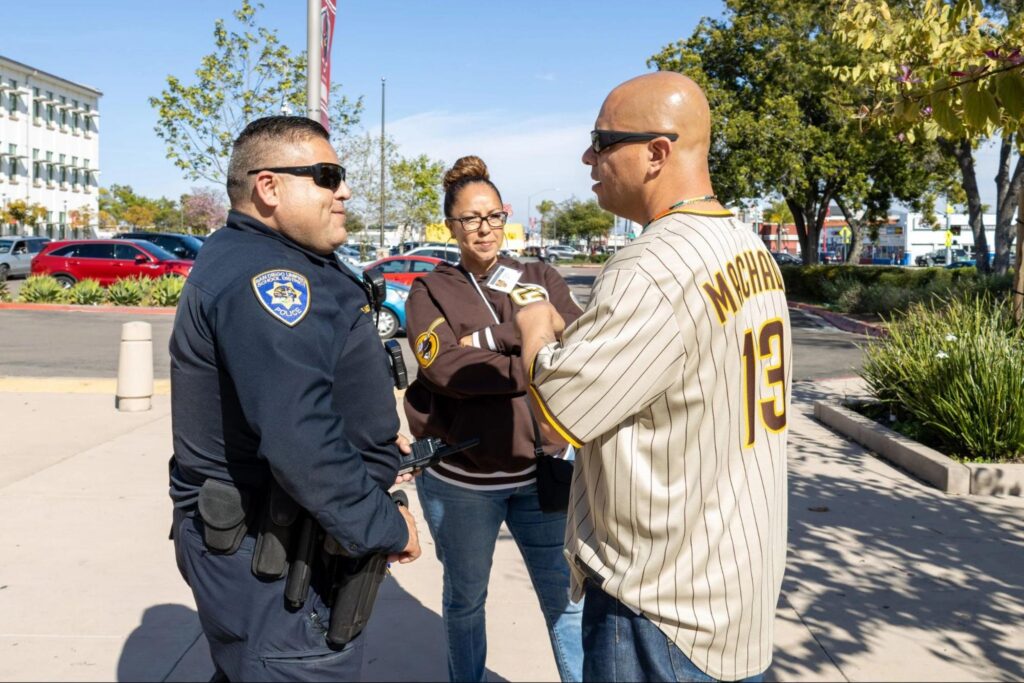
Our mission is to create public safety through credible messengers in marginalized communities. We work with young people involved in or at risk of entering the juvenile justice pipeline, support their families and help adults returning home after incarceration.
What makes our work different is that many of us share the same lived experiences as the people we serve. We come from these communities. We understand what our young people are facing because we’ve lived it ourselves.
Every day looks different. One moment we’re mentoring students after school, the next we’re supporting families, training professionals or working with young people inside juvenile hall. But at the center of everything is relationship-building and creating opportunities for healing and growth.
What first drew you to this work?
My own lived experience. I spent over two decades involved in the system, starting as a juvenile. It’s very easy to get into the system, but then it’s very, very difficult to get out.
When I got out of juvenile hall at 18, I thought I had it together, but that just wasn’t the case. I was this boy of color carrying chronic trauma, and I couldn’t figure that out. Within a few months, I found myself back in the system facing serious charges.
Going through prison and taking on leadership roles inside taught me a lot about respect, culture, accountability and survival. Today, I bring those lessons back into the community.
Ultimately, what we want to accomplish is helping people heal and grow from the things that contributed to their behaviors in the first place. We want them to become leaders in their communities. But healing has to come with opportunity. If you do the healing and there ain’t no opportunity attached to it, guess what? You can go back to old mindsets and old ways.
That’s why at Youth Empowerment, we’re focused on healing AND opportunity because our communities deserve both.
Who inspired you growing up?
My mother has been a true inspiration for me. She worked multiple jobs, cleaning homes and doing everything in her power to put food on the table. She was always there for me, whether I was in juvenile hall or adult prison.
What inspired me even more was watching her turn her compassion into action. She eventually started her own nonprofit focused on helping people experiencing housing instability, mental health challenges and poverty.
I remember her bringing people into our home, feeding them, and doing everything she could to help them get back on their feet. When I came home, she was one of the people who encouraged me to believe I could make a difference too.
She’s always been strong, spiritual and committed to helping others. I admire her deeply, and she’s been one of the biggest inspirations in my life.
What do you see as the most pressing issue facing boys and men of color today?
At the root of everything, it’s the trauma. People see the outcomes. They see the gang involvement, the violence, the incarceration. What I see are the things underneath all of that.
I see chronic and complex trauma. I see sexual abuse. I see poverty. I see boys growing up without their fathers at home. I see moms working multiple jobs, trying to hold everything together.
I know this because that was my experience too. I’ve spent years working as a gang expert and mitigation expert in the courts. I’ve worked on dozens of serious cases. When I sit down with young people and hear their stories, I see the same patterns over and over again.
We need to stop looking only at the behavior and start addressing the trauma underneath it. Because if we don’t, we’re going to keep seeing the same outcomes generation after generation.
How has your experience with the justice system shaped your leadership?
I know what it feels like to be judged before you’re understood. That’s why I lead with humility, honesty and purpose. I don’t come from a place of punishment. I come from a place of understanding.
My lived experience is my strength. It’s what allows me to connect with young people and families authentically. It also drives me to bring other credible messengers into this work so they can lead and create change in their own communities.
How has fatherhood influenced your work?
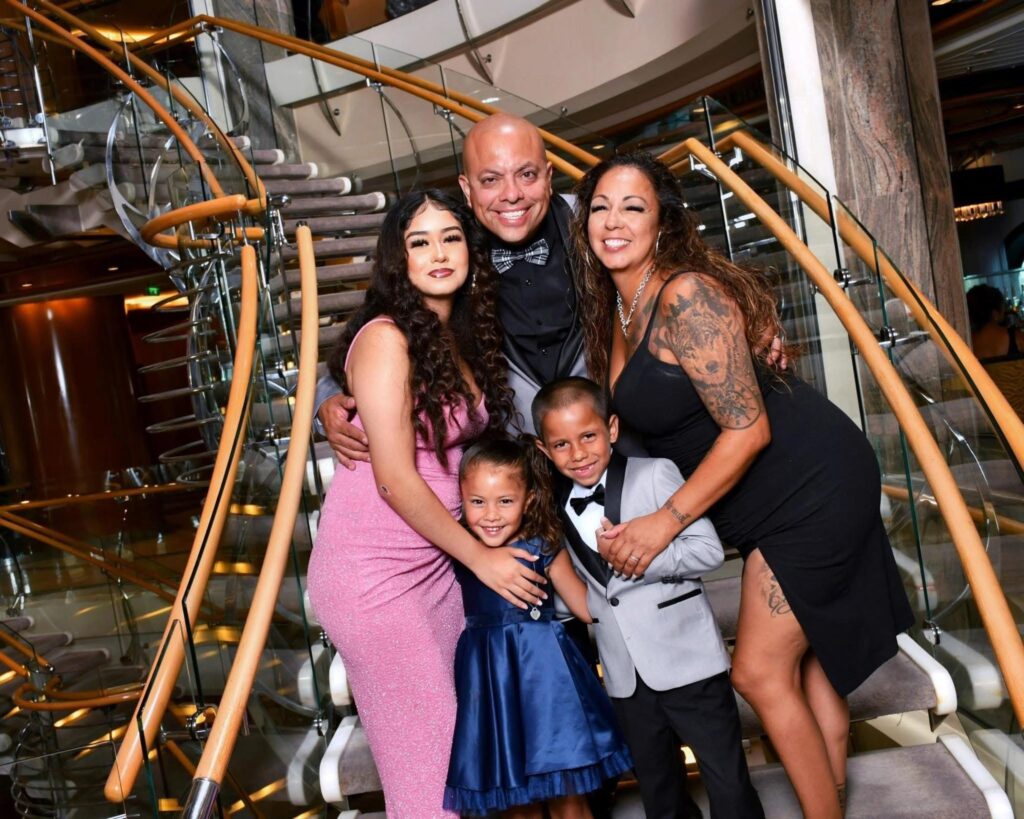
Fatherhood changed everything. There was a time when I didn’t think I’d have a family. Today, being a husband and father is one of the greatest blessings of my life.
My children remind me why this work matters. I want them to inherit something different. I want them to see that healing is possible and that we can break cycles that have existed for generations.
One of the moments that sticks with me happened when I was taking my son to a soccer game. He was reading the back of my book, The Resilience Blueprint, where I talk about my past and my time in prison. He looked at me and said, “Dad, I thought you were a good guy.”
I told him, “Hell yeah, I’m a good guy. My past doesn’t determine my present. What am I doing right now?” He started thinking about it. He said, “Well, you help people. You visit people in jail. You go to Juvenile Hall. You work with the community.”
Then he looked at me and said, “Yeah, you are a good guy.”
That conversation meant a lot to me because it reminded me that our mistakes don’t have to define us forever. What matters is what we do with our lives moving forward. I want my children to see that healing is possible. And like any father, I just want to see my kids outgrow me and have opportunities I never had.
Where do you see the biggest gaps in systems serving boys and men of color?
Too often, systems respond to crises. Something has to happen, and then they want to respond to it. What are we doing to prevent it from the very beginning?
We also need to invest more deeply in organizations led by people with lived experience. A lot of times, the funding goes to the big organizations. We need more support for organizations being led by people of color who have that shared lived experience with the communities they serve.
Trust the people closest to the challenges. We have data that proves the impact of this work.
What keeps you hopeful?
The young people keep me hopeful. I get to meet people where they’re at, and I get to watch what happens when healing starts to take place. When I see somebody come out of that darkness and begin thriving, that’s what keeps me going.
One example is Hoover High School. That’s the same school where I got caught up in the pipeline when I was young. To come back now and bring service to that specific school brings me a lot of inspiration and hope.
When we first got involved, there were more than 100 incidents involving gang activity, fights and chronic absenteeism. We started building relationships. We started showing up consistently. We created after-school programming and mentorship opportunities.
Three years later, suspensions at Hoover High School are down 80% in year three of Youth Empowerment’s work there. Gang incidents dropped 25% in year one, and there have been zero gang fights this year.
What’s even more powerful is seeing young people who once saw each other as rivals now sharing space, going on field trips together, and supporting one another. This impact has never happened in the history of that neighborhood.
And look, I’m not bragging—I’m swagging on this impact. Because it shows what’s possible when credible messengers with lived experience are trusted to lead.
What does a thriving California look like for boys and men of color?
A thriving California is one where every boy and man of color has access to healing, mentorship, accountability and opportunity. We need a pipeline to success instead of a pipeline to prison.
It’s okay to express your emotions. It’s okay to talk about being angry. It’s okay to talk about fear and how you heal from it.
Ultimately, we need to connect organizations and resources to build healthy communities in the places where our boys of color are suffering the most. That’s what thriving looks like to me.