
Breaking the Cycle: J Vasquez on Healing, Accountability and Investing in Young People
Content note: This story includes discussion of childhood trauma, violence, addiction, incarceration and the loss of life.
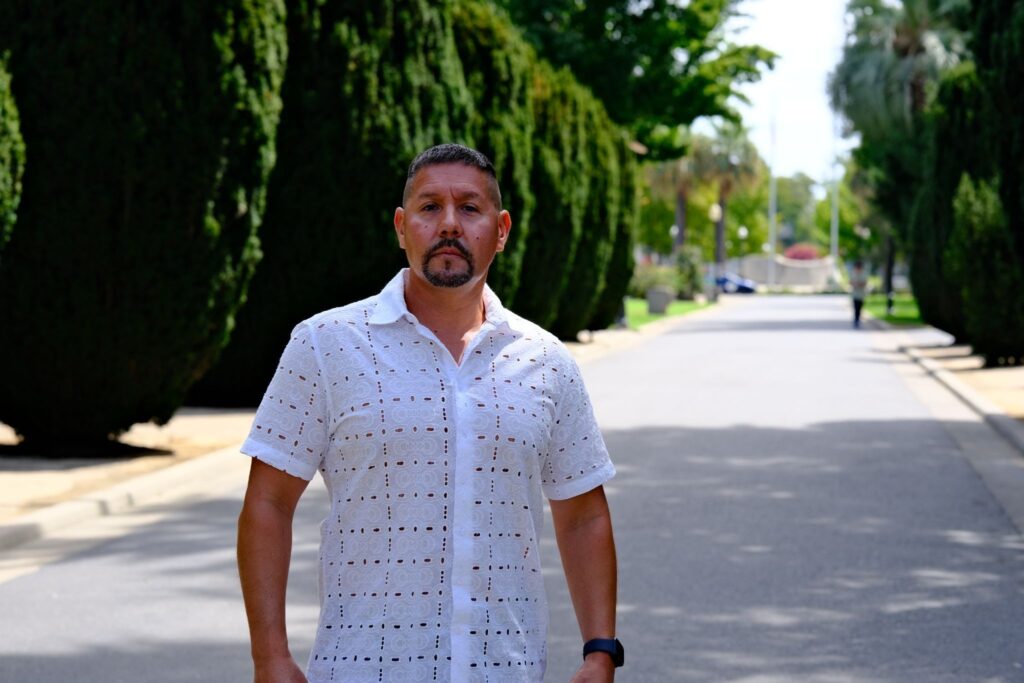
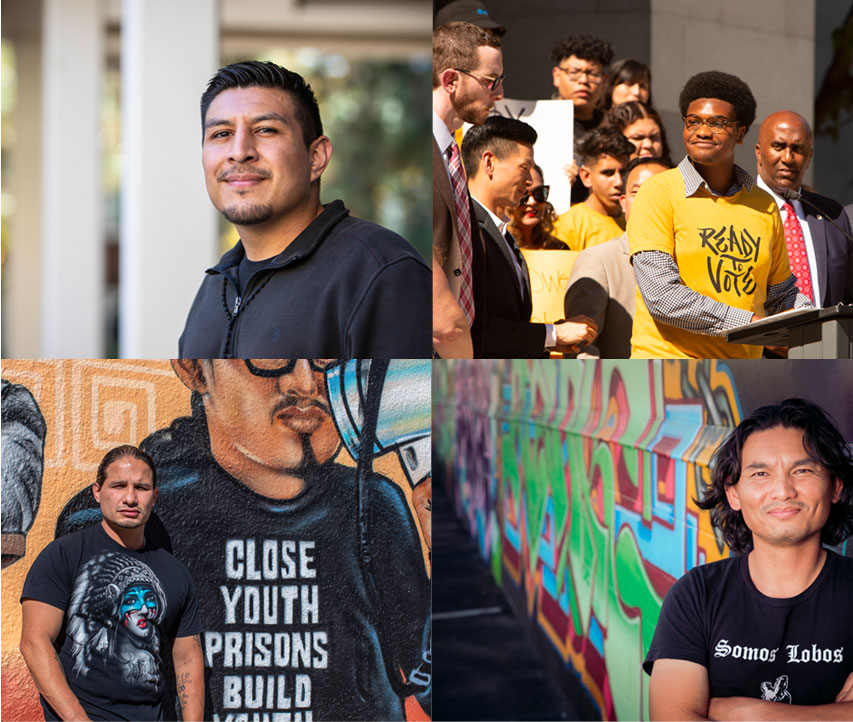
As Director of Policy at Communities United for Restorative Youth Justice (CURYJ), J Vasquez works to transform the systems and conditions that push young people into cycles of violence and incarceration.
J’s understanding of those systems is deeply personal. Growing up in Sacramento, J experienced family separation, addiction, violence and loss from an early age. Much of it became so normalized that, as a young person, he did not yet have the language to understand what he was carrying as trauma. He describes himself then as an angry young person looking for identity, belonging and an outlet for pain he did not know how to process.
By 16, J was incarcerated. He would ultimately spend 25 years in prison for a violent offense, and prison often reinforced the very beliefs about violence, masculinity and survival that he had learned before entering it.
His eventual healing journey led him toward accountability, education and a commitment to what he calls “living amends.” Today, through CURYJ, J is working to create systems that help young people heal, grow and thrive before harm and incarceration define their lives.
We spoke with J about the experiences that shaped him, the connection between unresolved trauma and violence, what true accountability looks like, and why breaking cycles of violence requires sustained investment in young people and community-rooted organizations like CURYJ.
Breaking cycles of violence requires investing in young people before incarceration becomes the intervention. To stay connected to CURYJ’s work creating pathways to healing, belonging, and opportunity for young people and their families, visit curyj.org.
Tell us about some of the experiences that shaped you growing up.
My earliest memories are actually of me and my dad. Him putting me on his shoulders, taking me to the corner store, the corner 7-Eleven. Those were good times. I remember those times, and they were good feelings that I had as a child.
But I also remember when he was in and out of my life, and I didn’t understand why. No one sat me down and talked to me about it. Just trying to process that as a child was challenging, in retrospect, and even questioning my own self, like, was I not good enough for my dad?
He was also incarcerated. He struggled with his own addiction, my mother as well, but my dad especially. Because of that, he was just never able to fully be present as a father.
When I was 15, my father died. I wish I would’ve been able to talk about the pain I was feeling from losing my father, but I didn’t have the skills to really open up and be vulnerable and communicate that. Even at my dad’s funeral, I didn’t cry.
Not even a month after my father passed away, I got locked up for the first time in Juvenile Hall and expelled from school. I’m not blaming my father’s death. I’m laying the context for what I was going through at the time as a 15-year-old.
Looking back at me and my friends now, our gang affiliation was really about us being kids trying to find some type of identity, some type of belonging, some type of outlet for the trauma we carried. I can say that now as a grown man, after doing the introspection and soul-searching to understand why I got involved in that lifestyle.
You’ve talked about carrying trauma without even knowing it was there. How did that show up for you?
I wasn’t able to process my trauma, not even acknowledging my trauma. I just knew that I was an angry child.
I also grew up with a lot of toxic masculinity, where men don’t open up and ask for help. You don’t show sadness because that’s a weakness.
What I learned with trauma is that you can’t ignore it, because unresolved pain is going to come through and either cause self-harm or other harm, or both. Self-harm can be getting high, self-medicating. Other harm is committing violence against others, from strangers to the people you love.
What happened when you entered prison? Did incarceration interrupt those patterns?
It did not help me process the trauma. Basically, it didn’t help me heal.
I intentionally don’t use the word “rehabilitation,” because rehabilitation means restoring someone to their former wholeness and wellness, when I wasn’t there in the first place. I like to use the words “my healing journey.”
Going into that environment was not conducive to helping me on my healing journey. It not only didn’t address the trauma, it exacerbated the trauma and created new trauma. And at the same time, it reinforced these messed-up beliefs that I already had, like it’s okay to use violence because that is the only way to get respect.
Those were beliefs I had growing up in my neighborhood that were ten times more reinforced inside prison. It made it that much harder to unlearn those things because those became my core beliefs: You don’t show weakness. You don’t show sadness. You don’t show fear.
At the same time, I thought, I’m never going to get out of here. I’m just going to grow old and die in prison. So why am I going to try to better myself? Why am I going to get higher education? Why am I going to learn a vocational trade? Why am I going to an anger management group? What’s the point of bettering myself if life is never going to get any better?
So what began to change for you?
I got to a point where I remember thinking to myself, Even if I’m never going to get out of prison, I want something different for my life. I didn’t know what that was going to be. I remember being scared.
When I first started going to groups, I didn’t even share. I still didn’t feel safe being open and vulnerable because I had all these beliefs around men not sharing their feelings.
For several years, I just listened to other men share their experiences, their traumas, their beliefs, the connections they had been able to make through their own healing journeys. I heard so many commonalities.
Eventually, I started making those connections to my childhood and addressing that stuff.
What I found through my healing journey is that the only way out was through.
It was hard, because I didn’t want to feel that stuff.
But it wasn’t only unpacking my trauma. It was learning new ways of thinking, new ways of reframing, new ways of communicating. Before, if I had a conflict, I thought the only way I was going to make someone understand me was through violence. I didn’t see other options.
Once I started learning different ways of nonviolent communication, such as using “I” statements and identifying high-risk situations, it got me to a point where I felt free, even though I was still in that environment.
What do you think about accountability now?
The way to really honor Robert, the teenage victim of the senseless murder I committed as a teenager myself, and his family, is to pick myself up and be a better person in honor of him, and to help others turn their lives around. That’s the best way I know. I call it living amends.
Even though I did 25 years of prison time, it’s not over for me. I’ll be living the rest of my life in honor of Robert and those I’ve harmed in the community, and the harm I’ve created. For me, that’s true accountability.
The only reason I got there is because of the healing that I was able to do, in spite of being in that very hostile environment inside prison, which is not conducive to healing. It was the men who were there who helped me along my healing journey. They helped me get to the point where I am able to be an asset to my community.
How does that connect to the work you do now at CURYJ?
I’m going full circle. I left Sacramento as a very traumatized, young, violent young person who wasn’t violent at his core, but I had accepted these beliefs and these feelings that led to those types of behaviors.
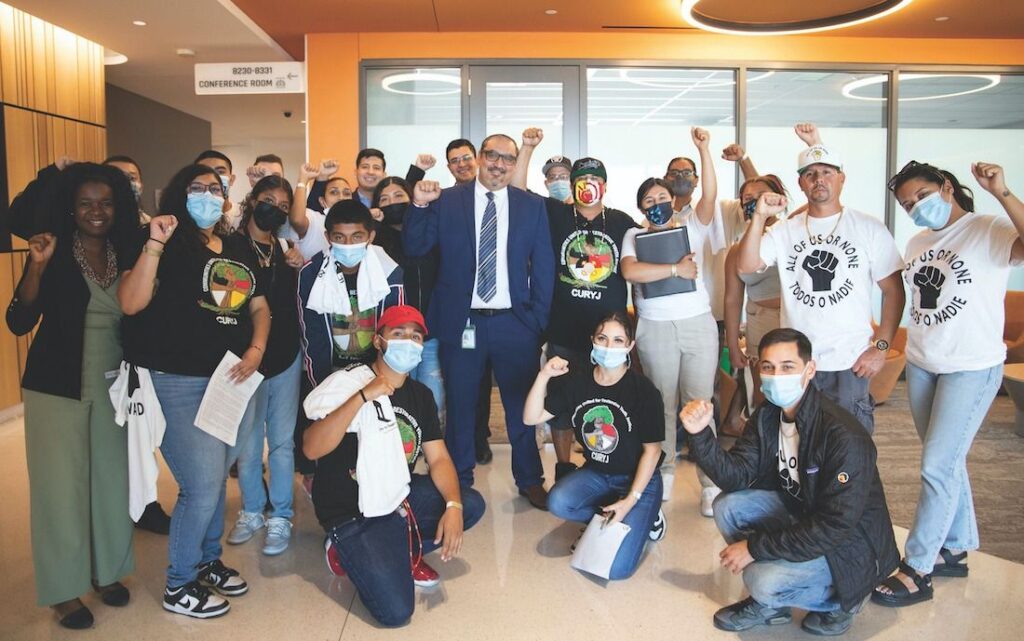
Now I’m back in Sacramento, and I have this career to help others and be of service to my community through a powerful organization like CURYJ. Our mission is to help young people heal, grow and thrive.
For me, the question is: How do we dismantle systems of harm and oppression, and how do we build more generative systems that help people heal, grow and thrive? That’s what we focus on at CURYJ—changing those systems at the state level and in the communities we serve.
While I was incarcerated, I learned that you have to meet people where they are. I saw that a lot of people didn’t want to leave their housing units to go to the chapel or education building for self-help groups. So I thought, Okay, I’m going to bring it to them. I created small-group programs inside the prison housing units, where people felt more comfortable.
What do you think people miss when they look only at incarceration or the act of violence itself?
We have to understand what people are carrying.
I know from my own life that unresolved pain can come out as self-harm or harm to other people. I also know what happens when a system takes somebody who is already traumatized and puts them into an environment that reinforces violence, tells them not to show fear or sadness, and gives them very little hope that life can ever be different.
That doesn’t mean just open the doors and let everybody out with all the traumas. People have to do the work. But the conditions inside are not conducive to healing, which ultimately leads to true accountability by understanding the harm that you created.
When I was finally able to connect to myself—to my core self, my authentic self—and take off that mask and feel my feelings, that’s when I felt remorse. That’s why I think we have to create the conditions for people to heal, grow and thrive, especially young people.
What will it take to sustain the boys and men of color movement and break these cycles for the next generation?
Investment. And investment is different things for different people. It’s whatever you’ve got to invest, whatever you’ve got to give.
For philanthropy, support people that are doing the work and making things happen regardless. We’re on a shoestring budget. We’re doing what we can. This is not a nine-to-five job, and we do it because we’re passionate about it. But at the same time, it does take resources to do this work.
After the George Floyd uprising, there was investment in CURYJ because we were already doing this work around police accountability, and now that has dried up.
For policymakers, commit to this. Invest your energy, your time and your commitment to these policy changes in spite of law enforcement association opposition.
And for my peers, invest in yourself and your own healing. I don’t mean that in a selfish way. For people to really be an asset to their communities, they’ve got to invest in themselves first and foremost. I can’t give what I ain’t got. I can’t pour into your cup if my cup is empty.
It all goes hand in hand. If philanthropy invests in organizations doing meaningful work, policymakers invest their time and commitment into transformative changes, and people invest in their own healing, we create living examples that can change the narrative.
The only way we’re going to change the narrative is through living examples like myself. People can finally look at me and say, “That person’s not a bad person. That’s not a bad kid. Look what J was able to do for his community.”