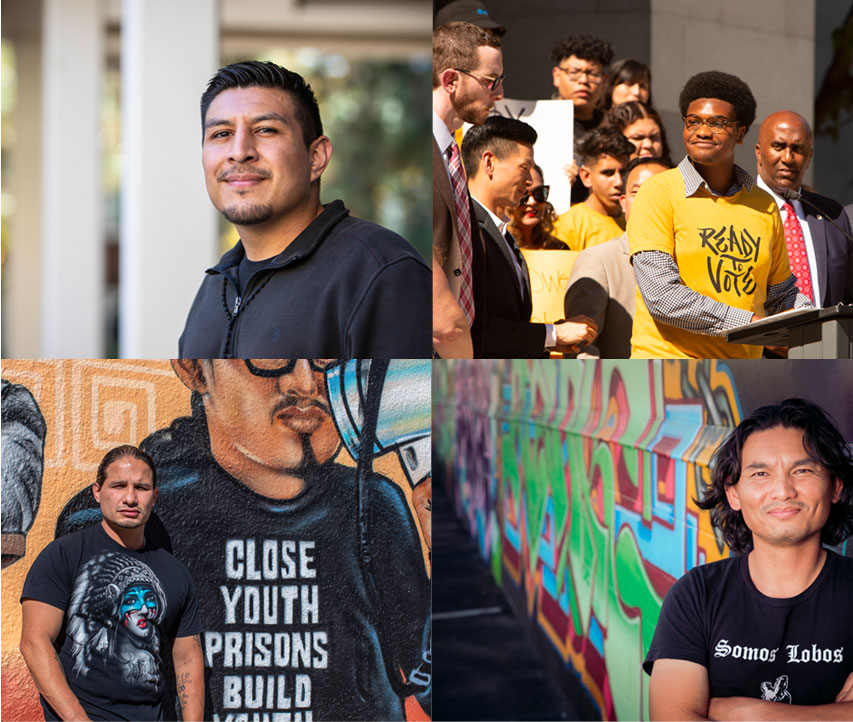

From the Cradle to Career: Assembly Select Committee Hearing Recap
On April 28, California Funders for Boys and Men of Color joined the second hearing of the Assembly Select Committee on the Status of Boys and Men of Color, held at the State Capitol in Sacramento. Organized in partnership with the Alliance for Boys and Men of Color and the office of Assemblymember Isaac G. Bryan, the hearing brought together researchers, educators, community advocates, parents and students to examine the educational journey of boys and men of color, from early schooling through college and career pathways.
The hearing featured three panels covering school safety and discipline, community schools investment, and college and career pipelines, followed by public comment from advocates across the state. Committee members included Assemblymembers Mike Fong, Jeff Gonzalez, Corey Jackson and Juan Alaniz.
The discussion highlighted structural inequities, including over-policing and disparities in education, while also elevating the Community Schools Partnership Act – legislation that would transform schools into neighborhood hubs, integrating academic instruction with health, social, and family services to improve student success and educational equity. Attendees also called for a $1 billion investment to fully fund and expand the community schools model across California.
What the Data Tells Us and What It Doesn’t
Panelists opened with a grounding in data. Dr. David C. Turner III of UCLA’s Million Dollar Hoods Project noted that school suspensions for male youth in California have dropped by more than 63% since 2012 — a meaningful marker of progress driven by legislative action such as the elimination of willful defiance suspensions. But numbers alone don’t tell the full story. Black boys still remain three times more likely to be suspended than white students, and K-12 school police stop Black youth at five times the rate of their peers.
Advocates also raised the issue of what Brandy Bowen-Bremond-Coleman of Coleman Advocates for Children and Youth called “underground suspensions” – students sent out of classrooms for hours at a time, untracked and unaccounted for. These informal practices quietly replicate the exclusion that formal policy reforms were designed to end.
“Even though we have been able to shift how these numbers show up, the punishment has become more elastic.” — Dr. David C. Turner III, UCLA
The Power of Community Schools
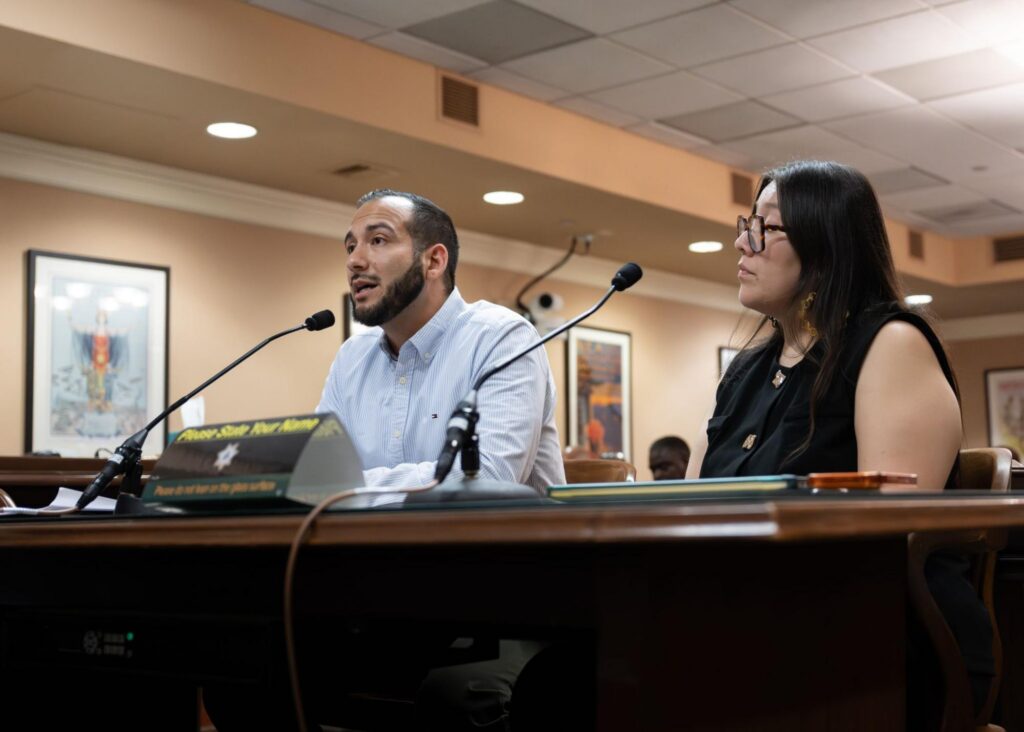
The second panel focused on building local school and community power through investment in community schools. Speakers from Californians for Justice, Reclaim Our Schools LA, MILPA, and The Center at Sierra Health Foundation brought a clear, unified ask: fully fund the California Community Schools Partnership Act with $1 billion in ongoing annual investment.
Community schools function as neighborhood hubs, not just standalone programs. They connect students and families to wraparound services, facilitate shared decision-making between parents, educators, and community-based organizations, and respond to hyper-specific local needs. For example, the local school leadership council in Los Angeles Unified School District brings parents who have traditionally been excluded from decision-making into conversations around school budgets, giving them both a voice and a platform in determining how resources and funding are allocated. This is ultimately the goal, as we know that increased parent involvement consistently leads to improved student outcomes.
Our Program Officer, Daniel Guzman, who testified on this panel, was a former community school coordinator in San Francisco Unified School District, and his ongoing leadership advanced community school efforts statewide. Daniel spoke to what makes the model work at the ground level: the community school coordinator role as a connector and bridge builder, aligning the many voices in a school community around a shared mission while building trust between schools, families and community partners who haven’t always had a seat at the table.
“The Community School Coordinator is not just an add-on role. It’s not just nice to have. It is essential infrastructure that organizes and aligns the resources of a school, including families and community partners around student success.” – Daniel Guzman, The Center at Sierra Health Foundation
Investing in the Pipeline: College and Career
The third panel widened the lens to higher education and workforce pathways, examining what it takes to not only get boys and men of color to college but to keep them there and connect them to meaningful careers. Panelists included faculty, students, advocates and nonprofit leaders.
César Rodríguez of the California Faculty Association laid out the structural imbalance plainly: California spent $1.6 billion more on state prisons last fiscal year than on CSU campuses, while campus spending on direct instruction and student wellness has dropped significantly since the 1990s. Meanwhile, Black male enrollment at California Community Colleges — the primary entry point for most Black men pursuing higher education in the state — has dropped more than 21% since the pandemic. Maynard Garcia-Hernandez of the UC Student Association, a first-generation college graduate, spoke to the barriers boys and men of color face before they ever reach a campus, calling for Cal Grant reform, equitable dual enrollment pathways, and sustained investment in early outreach programs.
Despite these challenges, panelists were clear that the outcomes gap is not inevitable. Dr. Aaron Vines of AMEND pushed back on deficit narratives, presenting data showing that Black male students in intentional support programs achieve course completion, retention and transfer rates above state averages — proof, he said, that there is nothing wrong with Black boys and men, but a great deal wrong with the institutions meant to serve them.
Michael Lynch of Improve Your Tomorrow echoed that, sharing a 99% high school graduation rate and nearly 80% college-going rate among scholars in their mentorship model. The ask from this panel was sustained, targeted investment in the organizations and programs that are already producing results.
“We firmly believe that it’s our practitioners who need remediation. There’s nothing wrong with our Black boys and our Black men. We have enough evidence of that to speak with certainty about it.” — Dr. Aaron Vines, AMEND
The Long Game
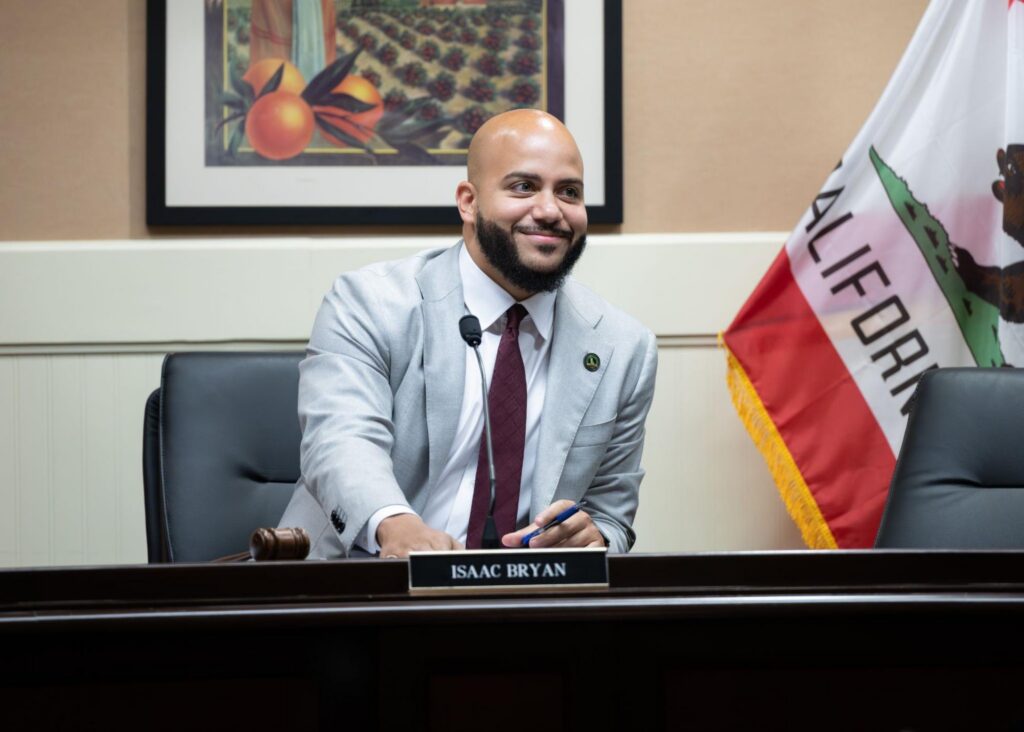
The hearing closed with public comment and reflections from committee members that made clear this work is deeply personal. Assembly Select Committee Chair Bryan shared his own story, in which he was suspended multiple times, failed out of middle school, and eventually earned a master’s degree from UCLA. The difference, he said, was people who invested in him.
“I then went to three high schools, and I’m famous at one of them because I got an F-minus in my English class, and you’ve got to work extra hard to get that minus. Nobody knows those things now because I graduated top of my class with a master’s from UCLA, and the difference between me and some of my incarcerated siblings is a lot of the work that you all do. It’s people who advocate for first and second chances, compassion and mentorship.” – Assemblymember Isaac Bryan
The common theme was that young people reach their full potential when they have caring adults, organizations, and systems in their corner, and that California has the data, the models, and the community expertise to build those conditions for far more young people. Together, speakers are asking the state to make the sustained investments to do so.
California Funders for Boys and Men of Color will continue to stand alongside community partners and legislative champions to advance that vision.